We failed a pilot run once. We built software so other teams don't have to.
Founded in Research Triangle Park, North Carolina. The RTP biotech ecosystem gave us proximity to alt-protein producers, fermentation CDMOs, and academic collaborators who helped validate our first models.
A 500L run that produced 40% of the titer we expected.
The biology was good. The strain was good. The bench runs looked excellent. But when we moved to 500L at a CDMO in RTP, the DO dropped below setpoint in hour 14 and never fully recovered. The run came out at 19 g/L when we needed 47 g/L to make the economics work for that customer.
The CDMO didn't do anything wrong. They ran our protocol. The protocol was the problem — it was designed around 2L kLa data, and nobody had done the math to account for how different the oxygen transfer environment would be at 500L with that vessel's impeller configuration.
After that run, we started building what we wished had existed: a tool that takes your bench data, takes your target vessel geometry, and tells you how the physics change at scale — before you spend a run finding out the hard way.
Make precision fermentation scale-up more predictable.
Precision fermentation has the potential to produce proteins and fats that otherwise require significant land, water, and carbon to produce via conventional agriculture or animal husbandry. The bottleneck isn't biology — organisms have been engineered to produce remarkable yields at bench scale. The bottleneck is translating those yields reliably to the scale needed for food and ingredient economics.
The tools that academic metabolic modeling researchers use exist. The problem is that they require significant expertise to apply to a specific industrial scale-up problem — and most alt-protein companies don't have an FBA modeling team. Fermvyne makes that analytical capability accessible to fermentation scientists who are good at their organism and their process, without requiring them to become computational biologists.
We're not trying to replace your process expertise. We're trying to extend it with a predictive tool that accounts for the physics your bench setup doesn't surface.
Why Research Triangle Park.
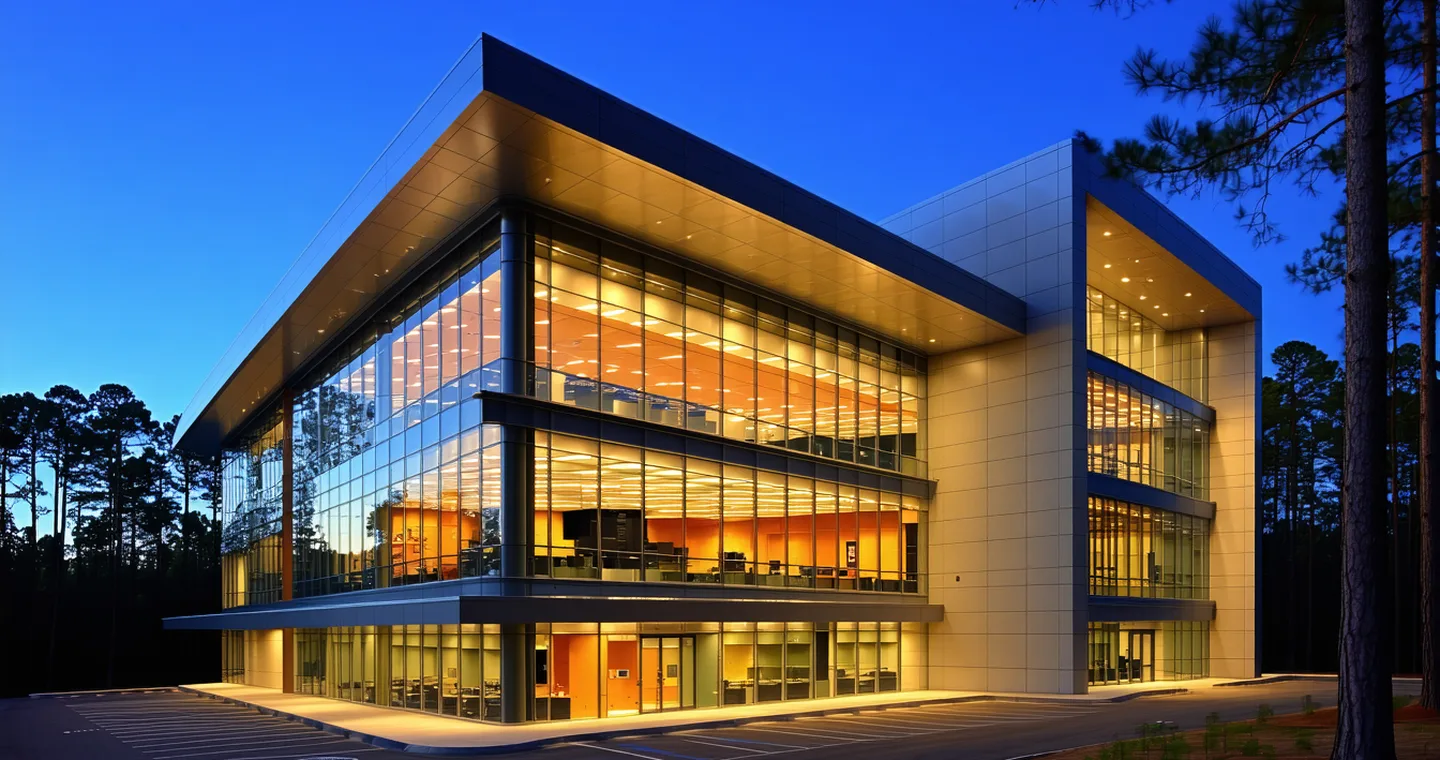
RTP's concentration of life science companies, fermentation CDMOs, and university research programs made it the right place to build and test Fermvyne. We can walk to collaborators. Our early validation data came from fermentation teams within driving distance.
The proximity to NC State's fermentation science programs, Duke's biomedical engineering research, and UNC's pharmaceutical sciences also means we have academic connections that inform our modeling approach — peer review from researchers who work with the same organisms we support.
800 Park Offices Drive, Suite 300Research Triangle Park, NC 27709
[email protected]
(919) 555-0183
Get in touch
For early access requests, science questions, or partnership inquiries — we respond personally.
Contact Us Meet the Team