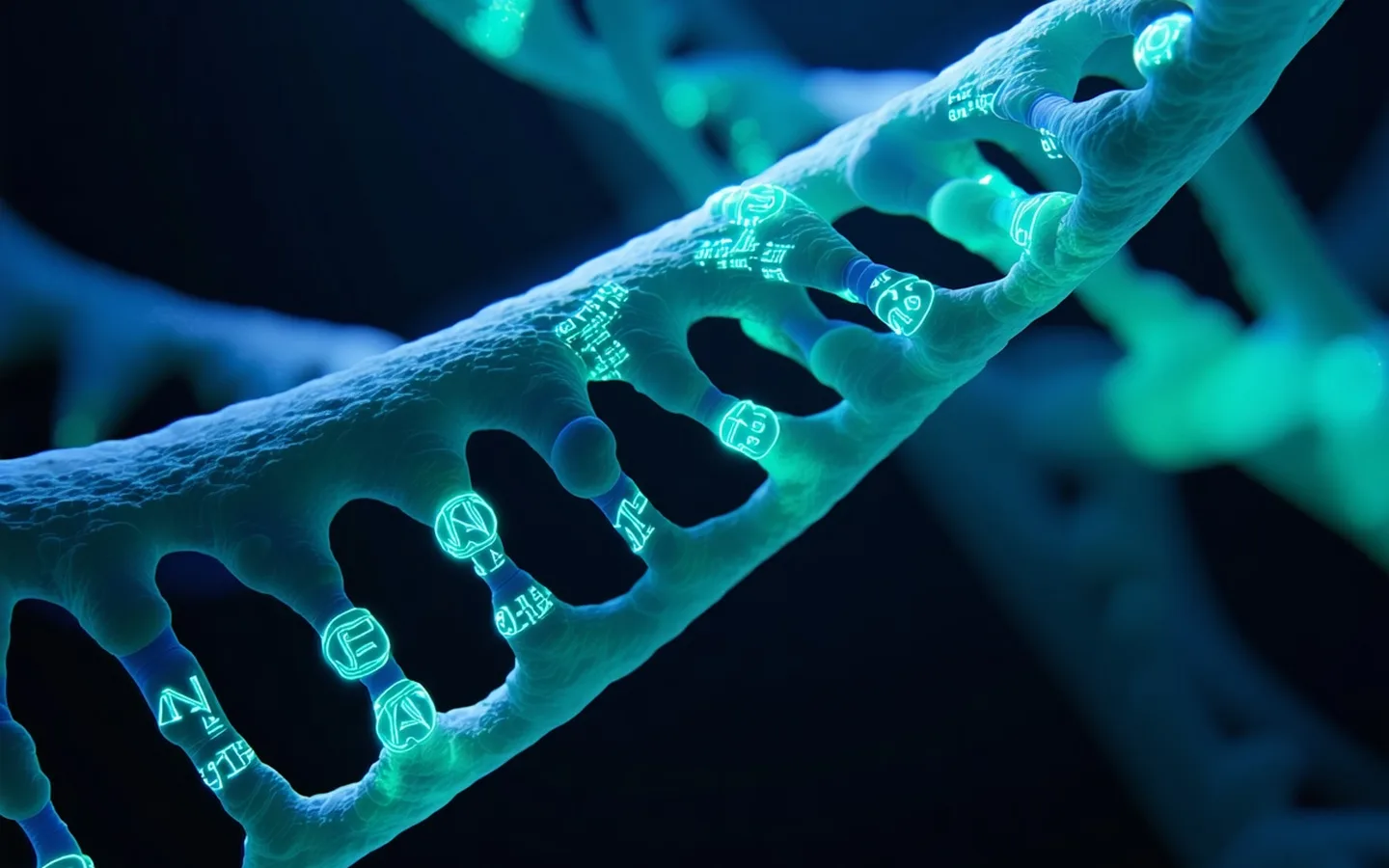
Generate novel enzymes.
Skip the guesswork.
Fermvyne generates novel enzyme sequences conditioned on your substrate and product SMILES — returning expression yield, solubility, and thermostability Tm predictions before you order a single synthesis.
How it works
From reaction to ranked candidates
Define your target reaction
Input substrate and product SMILES strings, or describe the enzyme class and EC number. Specify optimization targets: thermostability range, expression host, cofactor preference.
Generative model proposes sequences
Our transformer-based model — trained on EC-number-annotated UniProt entries, BRENDA reaction data, and AlphaFold2 structures — generates novel sequences conditioned on your reaction context.
Receive predictions + ranked candidates
Each candidate sequence ships with an expression yield estimate, solubility score, thermostability Tm prediction, and a FASTA file ready for gene synthesis ordering.
Capabilities
Four things the model handles. One pipeline.
Sequence generation
Produces novel enzyme sequences outside the UniProt training distribution — not nearest-neighbor retrieval, but generative design conditioned on reaction chemistry.
Biophysical prediction
Parallel prediction heads output solubility probability, E. coli expression yield category, and thermostability Tm range for each generated sequence before synthesis.
Pathway-level design
Co-design multiple enzymes across a metabolic route simultaneously, with cofactor balance checks (NADPH/NADH stoichiometry) built into the generation objective.
API + Benchling integration
Programmatic access via REST API and Python SDK. Push results directly into Benchling ELN workflows. Export FASTA files to Twist or IDT for direct gene synthesis ordering.
Our model was trained on 47M enzyme-reaction pairs from curated databases — not just UniProt sequence annotation.
Reaction context — substrate and product structure, cofactor class, EC hierarchy — is encoded at training time, so the model understands catalysis, not just fold. That's why our expression predictions hold up on sequences outside any training homolog cluster.
Read the architecture details →Use cases
What protein engineers use it for
Redesign for industrial temperatures
Redesign an existing enzyme to operate at 65°C for industrial fermentation. Input FASTA + target Tm. Receive 12 ranked candidates within hours.
Co-design a non-natural route
Design 4 enzymes for a non-natural biochemical route with balanced cofactor stoichiometry. Fermvyne checks NADPH/NADH feasibility across the full pathway simultaneously.
Pre-filter before synthesis
Replace 8-week directed evolution screening with 2-day computational pre-filtering. Order only the predicted actives — typically 72% wet-lab confirmation rate.
From the bench
We ran Fermvyne on 6 enzyme candidates before ordering gene synthesis. 5 expressed. That used to take us 3 months.
The thermostability predictions were within 3°C of our DSF data on 14 of 17 variants. We trust the model now.
Design your first enzyme today.
Free tier. No wet lab. Ranked candidates with Tm estimates in under 10 minutes — order only the ones worth synthesizing.